
The Recreational Software Association (ESA) report Basic Facts for the United States Electronic Games Industry 2026, dated 11-25 February 2026, investigated 13545 participants, including 9932 players who play at least one hour a week and 3613 people who play less than one hour a week or not at all. Data show that by 2025, more than 212 million people between the ages of 5 and 90 will be playing games in the United States.
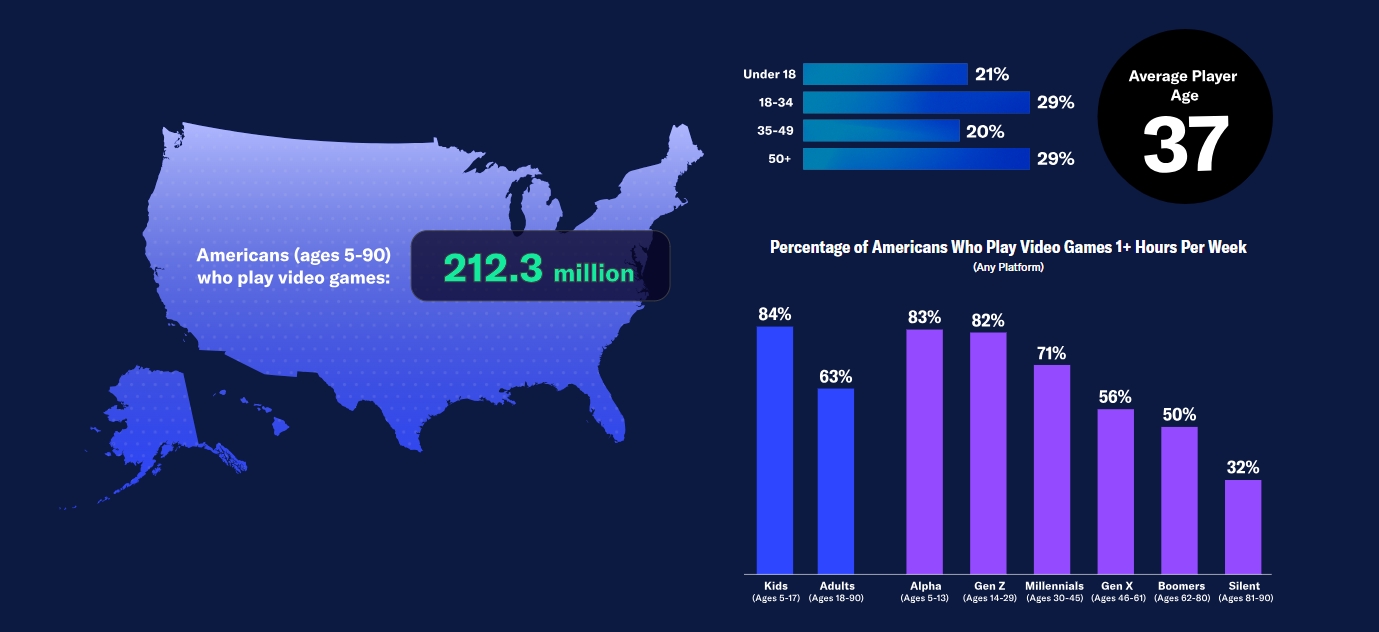
The report found that the average age of United States players was 37 years, with half of them aged 35 years or over. The percentage of active family members is 53 per cent for men and 46 per cent for women. Over the past year, 83 per cent of United States households had at least one game device. Players spend 21 per cent of their weekly electronic screen time on games, averaging 12 hours a week.
Mobile devices are the most popular platform, with 73 per cent of households and 80 per cent of players aged 8 and above using them. Almost one third of the players are fully mobile. Hand-to-hand tours are popular at all ages and are more common in women ‘ s play houses. The use of PCs and game hosts decreases with age and is more common in men ‘ s homes. Overall, 52 per cent of players use PCs, 44 per cent host and 10 per cent VR equipment.
The CEO and CEO of ESA Stanley Pierre-Louis said: “The game experience on the mainframe and PC remains very important for the core player. Because you can play and interact with other players, and the equipment itself is very innovative and powerful and can bring extraordinary game experiences.”
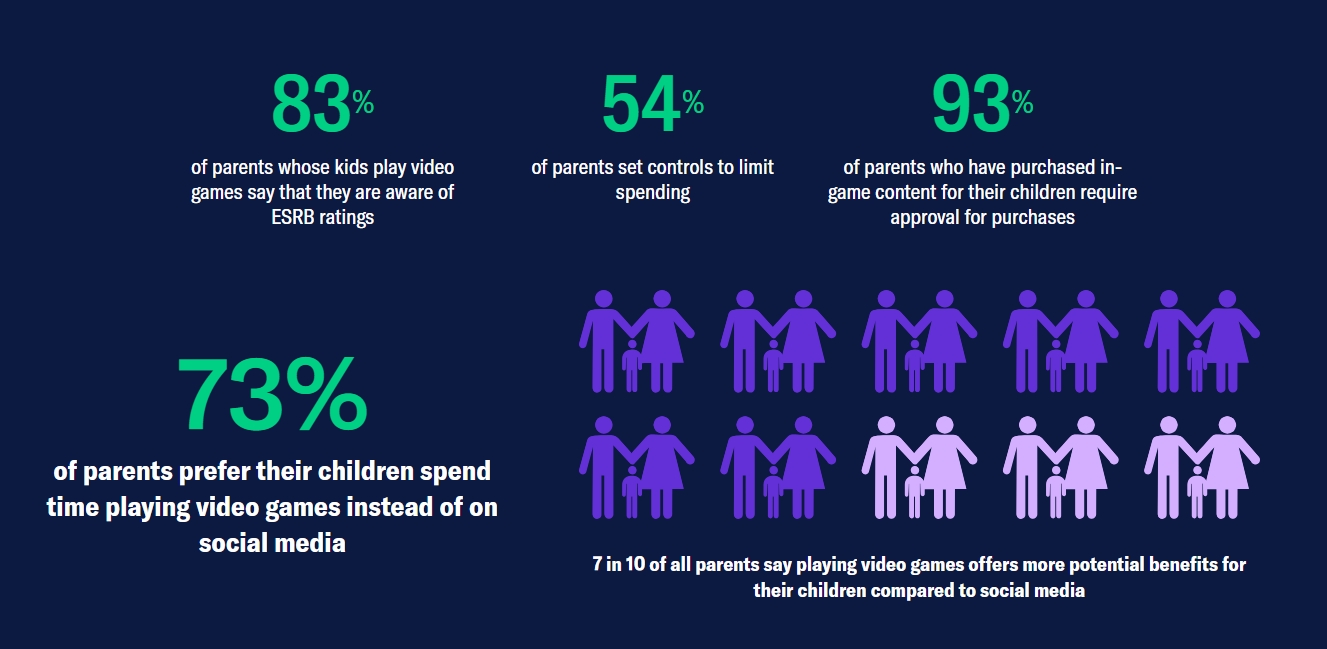
Seventy-five per cent of parents play games every week, 81 per cent of them indicating that they like to play with their children. Half of parents allow children to play games to develop skills. About 40 per cent of parents do so to encourage their children to socialize or they like to play together. Parents say that games account for one quarter of the children ‘ s weekly screen time. Most parents prefer to spend time on video games rather than on social media.
In the past year, 58 per cent of players downloaded free games and 43 per cent purchased them. Prices and games are the primary factors in a player ‘ s choice of game, followed by storylines, game types, images and single-person models. Most young players, the A generation (69 per cent), the Z generation (78 per cent) and the Millennium generation (67 per cent), spent money on games, spending an average of $20 a month.
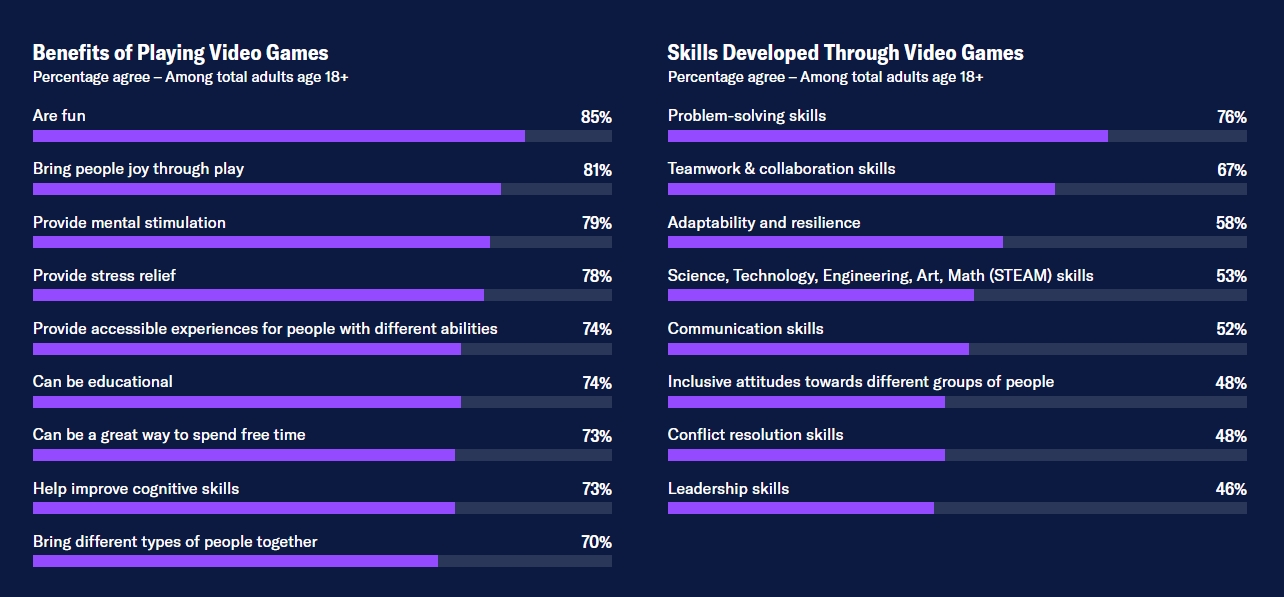
In adult playhouses surveyed, 85 per cent considered the game to be fun, 79 per cent thought it could stimulate thinking and 78 per cent thought it would relieve stress. The younger generation places greater emphasis on the role played by the game in promoting interpersonal interaction (88 per cent) and in building relationships (87 per cent). Most adults believe that video games contribute to problem-solving (76 per cent), teamwork (67 per cent), adaptability and resilience (58 per cent), STEM skills (53 per cent) and communication (52 per cent).
“Most people think that games can stimulate the brain, relieve stress, and have educational significance,” Pierre-Louis explains. “This surprises us because non-players are often concerned about their place in society. We see a shift in the attitude of all Americans towards video games. Twenty-three decades ago the game was infamous, and the impact of the game was fully demonstrated by this shift.”
Nearly 90 per cent of the participants indicated that, both in the virtual world and in real life, play had improved their performance in the real world. According to Pierre-Louis, NBA and NFL players “play these games in large numbers” during break hours.
“Some coaches noted that the Tactical Manual was better understood when the players came to the training camp, because when playing Madden Football, it contained some signals that were not common in daily games. Some children are exposed to these content from an early age and become adults and participate in relevant competitions with a good understanding of professional terminology. To help athletes adapt to reality.”

Overall, Pierre-Louis stressed that the latest study of ESA “proves that games remain the most popular and successful form of entertainment in the country and the world”. “We hope that the industry will create the best experience and show passion and art in the most powerful way to reach as many people as possible.”
